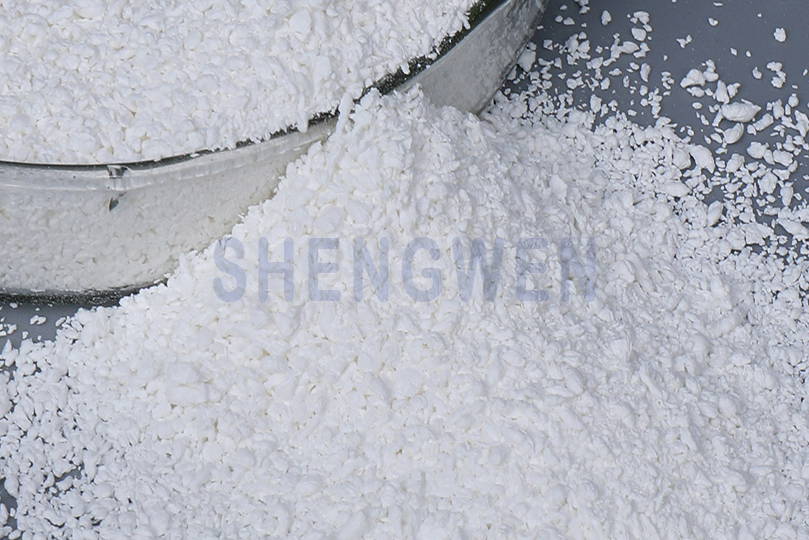
Polyethersulfone (PES) membranes are used in biopharmaceutical filtration because of their thermal stability, chemical resistance, and versatile separation capabilities. Understanding their properties and applications helps manufacturers evaluate suitable materials for different filtration processes.
PES offers good thermal stability for demanding engineering applications. Its heat deflection temperature (HDT/A) is 205°C under the specified test conditions.
This value describes a resin property rather than the maximum operating temperature of a finished membrane. Steam sterilization compatibility must be confirmed through application specific testing.
PES has good chemical resistance and mechanical properties, making it a candidate for membrane applications that require material stability. Actual compatibility depends on the chemicals used, their concentrations, exposure temperatures, and contact duration.
PES can be used to produce hollow fiber membranes and other porous filtration structures. The resulting membrane performance depends on the resin grade, formulation, manufacturing process, and pore structure.
For available grades and material specifications, see the manufacturer's PES resin product page.
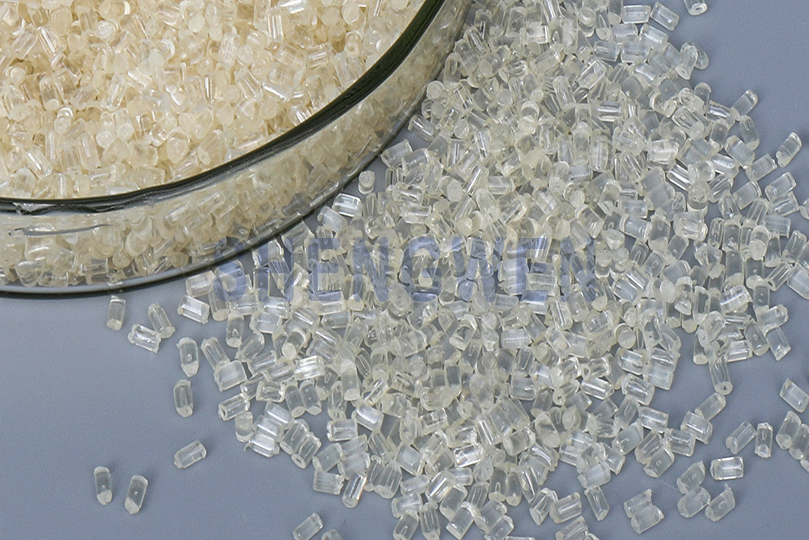
PES membranes can be used to filter process buffers and other aqueous solutions. Depending on the membrane's pore size and validated performance, filtration can help remove particles or microorganisms before a solution moves to the next production stage.
Sterilizing grade filtration requires specific microbial retention validation. Selecting PES as the base polymer alone does not establish sterile filtration performance.
Protein filtration requires careful control of product recovery, membrane fouling, and adsorption. PES membranes may be considered for applications where suitable flow characteristics and low protein binding are important.
However, protein adsorption varies with membrane formulation, surface treatment, pore structure, and process conditions. Finished membrane testing is necessary to determine whether a particular product meets the requirements of a biopharmaceutical process.

PES is used in hollow fiber membranes and hemodialysis membrane materials, where material stability and filtration performance are important.
Its broader role in membrane and filtration applications also highlights the importance of selecting materials according to the requirements of each application.
Medical devices and biopharmaceutical filtration systems still require different performance evaluations and validation procedures.
Filtration efficiency depends on membrane pore size, structure, and the target contaminants. Manufacturers should select membranes according to the required separation level and verify performance using appropriate retention tests.
For biopharmaceutical applications, a membrane intended for sterilizing filtration requires suitable microbial retention validation. General material properties cannot replace these results.
Protein recovery is an important consideration when filtering valuable biological products. Membrane surface properties, operating conditions, and interactions between the membrane and process fluid can influence adsorption and product loss.
Testing with representative process fluids helps determine whether a membrane is appropriate for a specific application.
Cleaning agents, process fluids, and sterilization conditions may affect membrane performance over time. Compatibility assessments should reflect the intended chemicals, concentrations, temperatures, and exposure cycles.
Manufacturers should review finished membrane data rather than relying exclusively on raw resin specifications.
The manufacturer's PES product range includes F2050, F2150, F2250, and F2350 grades with grade specific technical properties. Selecting a grade requires reviewing its specifications and confirming its suitability for the intended manufacturing process.
Melt flow rate alone does not determine casting solution viscosity or establish suitability for hollow fiber spinning. Process specific evaluation is necessary.
Before production, manufacturers should review the relevant technical data sheet and confirm material specifications with the supplier. Depending on the application, evaluation may include resin consistency, moisture control, chemical compatibility, and finished membrane performance.
The PES technical data sheet provides a starting point for reviewing the listed material properties. Raw resin specifications do not replace finished membrane validation for microbial retention, extractables and leachables, or sterilization compatibility.
No. Suitability depends on the resin grade, manufacturing process, and requirements of the finished membrane. Confirm the intended application with the supplier before selecting a material.
No. HDT is a material test result, not a sterilization qualification. The finished membrane must be tested under its intended sterilization conditions.
Drying conditions depend on the specific resin grade and processing method. The manufacturer's technical data sheet should be consulted before processing. Parameters for injection molding or extrusion should not automatically be applied to membrane casting or hollow fiber spinning.
Any drying temperature or time should be treated as reference information only and confirmed with the supplier's technical team before production.
PES offers useful material properties for selected filtration applications. Choosing the appropriate resin grade and validating finished membrane performance are essential for biopharmaceutical use. For grade information or technical guidance, contact our team to discuss your requirements.
Processing note: Drying and processing parameters are for reference only. Confirm the applicable grade and process conditions with the supplier before production.
By continuing to use the site you agree to our privacy policy Terms and Conditions.