High reliability product design requires materials that can maintain consistent performance throughout their service life. Material selection therefore plays an important role when components must operate reliably under demanding conditions.
PEI, or polyetherimide, is widely used where consistent material performance is required. Its properties and available product forms make it worth considering for reliability focused component design.

PEI is designed for applications where materials need to maintain performance at elevated temperatures. Tuntun Plastic lists a heat deflection temperature of around 205°C and a relative thermal index of 180°C for its natural PEI resin. The material also offers high strength and rigidity at elevated temperatures.
This combination helps engineers consider PEI for components that need to remain stable during repeated or continuous heat exposure.
A reliable component also needs to maintain its intended shape and mechanical function during use. PEI provides good mechanical properties together with dimensional stability, making it suitable for precision components and structural parts.
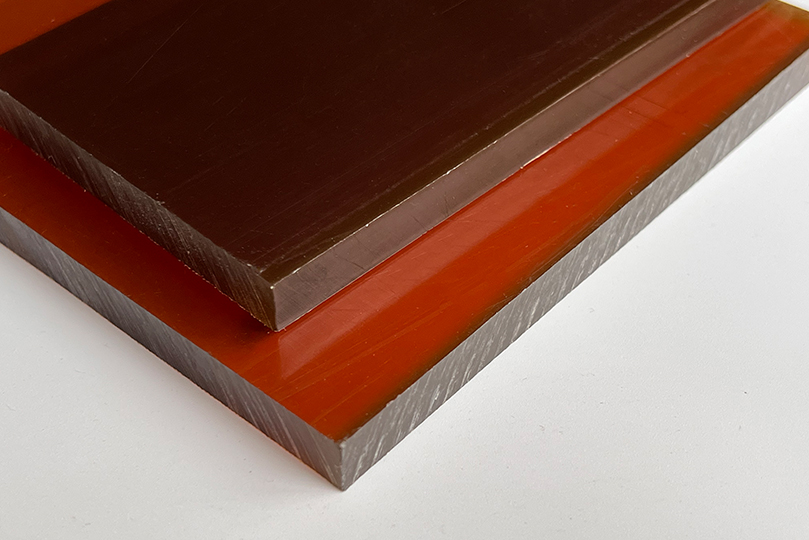
For projects requiring PEI in machined or semi finished form, PEI rods and boards are available in different sizes. The product range also includes reinforced options for applications requiring additional stiffness and dimensional stability.
PEI has excellent electrical properties and can maintain stable electrical performance across a wide range of environmental conditions. This makes it suitable for electrical and electronic components where insulation and dimensional stability are important design considerations.
The material is also naturally flame resistant without requiring additional flame retardant additives, adding another useful property for electrical applications.
PEI also provides good chemical resistance and mechanical properties. Depending on the grade and application, these characteristics can help components maintain their intended function when exposed to demanding operating environments.
The specific PEI grade should still be selected according to the actual temperature, mechanical load, chemical exposure, and electrical requirements of the component.
Some applications require more stiffness or strength than a standard PEI formulation provides. Glass fiber reinforcement can be considered when these additional requirements are important.
Tuntun Plastic's PEI GF board is described as having high toughness and strength, high temperature resistance, and excellent electrical properties. The board is also intended for structural components requiring high strength and stiffness at elevated temperatures.
PEI semi finished products can also be supplied in different dimensions according to component requirements. The standard PEI board range listed by Tuntun Plastic uses a 1250 × 620 mm format with thicknesses from 4 mm to 100 mm. Special dimensions can be requested for specific projects.
This allows engineers to select a suitable starting size instead of relying on a single standard specification for every application.
 What Should Buyers Check Before Ordering PEI?
The required product form should be confirmed before ordering. PEI is available as resin as well as semi finished rods and boards, while reinforced versions can be selected when additional mechanical performance is required.
For rods and boards, buyers should confirm the required dimensions, tolerance, color, and reinforcement according to the final component design.
Availability is also important for production planning. Tuntun Plastic states that a 3 kg PEI sample can be provided from stock within 5 working days. For bulk orders, the listed production lead time is approximately 15 to 30 working days after order confirmation.
The supplier also provides customization for different board and rod sizes, colors, and filler options such as glass fiber and carbon fiber. Its customization service highlights inventory of regular size semi finished products and support for customized requirements.
Before production, buyers should also confirm the material grade, specifications, applicable test data, and required compliance documentation. This is particularly important when the material will be used in a regulated or performance critical application.
The appropriate specification should be confirmed with the supplier rather than relying on general PEI data from different grades.
PEI combines thermal stability, mechanical strength, dimensional stability, electrical properties, and flame resistance. These characteristics make it suitable for components that require consistent performance under demanding operating conditions.
Tuntun Plastic offers PEI resin as well as semi finished PEI products such as rods and boards. Reinforced PEI options are also available for applications requiring additional mechanical performance.
Yes. Tuntun Plastic states that PEI raw materials and semi finished products can be customized in areas such as size, color, and filler selection. Glass fiber and carbon fiber reinforcement are among the available options.
Processing temperatures for PEI can vary depending on the material grade, equipment, and processing conditions. General temperature values should be treated as reference only. Please contact the supplier for application specific processing recommendations.
PEI supports high reliability product design through a practical balance of thermal stability, mechanical performance, dimensional stability, and electrical properties. Available forms include resin, rods, boards, and reinforced options, with different sizes and customization possibilities for specific requirements.
For PEI grade selection, dimensions, stock availability, or customized requirements, contact Tuntun Plastic to confirm the appropriate material and specification for your project.
By continuing to use the site you agree to our privacy policy Terms and Conditions.