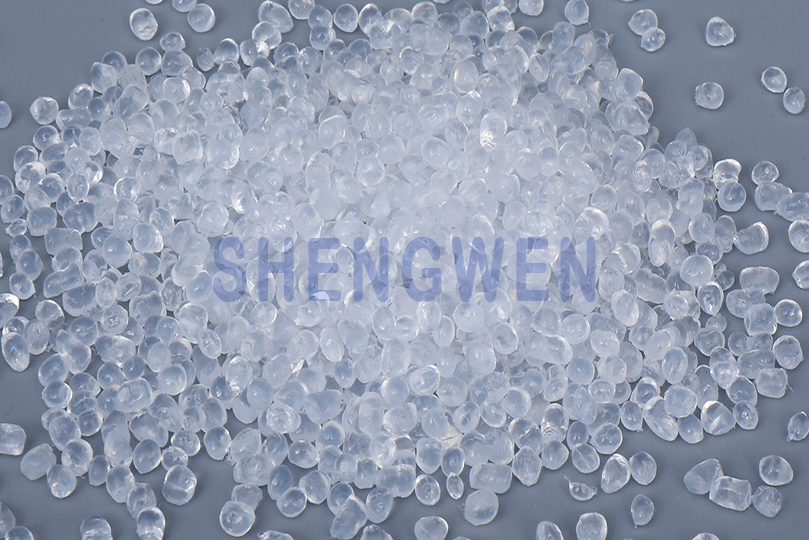
PEBA is suited to applications that require flexibility under repeated movement and long term use. Its combination of elasticity, low density, fatigue resistance, and low temperature performance gives designers more flexibility when selecting materials for demanding flexible components.
These characteristics make PEBA suitable for applications such as sports shoes, eyewear, smart wear, automotive tubing, and cable wrapping. Understanding its deformation and recovery behavior can help buyers evaluate PEBA grades based on the flexibility and durability requirements of the finished part.
PEBA is a thermoplastic elastomer made from polyether and polyamide blocks. The polyether segments contribute flexibility and elastic recovery, while the polyamide segments provide strength and structural stability.
This block structure allows PEBA to combine flexibility with mechanical support. The material can deform under external force and recover its shape without relying on plasticizers, making it suitable for components that require regular movement or flexing.
The PEBA material overview provides further information about its structure and key properties.
PEBA provides good rebound, elastic recovery, and fatigue resistance. These properties help the material recover after repeated bending, compression, and other forms of deformation.
This recovery behavior helps flexible components maintain their functional movement over repeated use. Its low temperature performance can also help preserve flexibility in colder service environments.
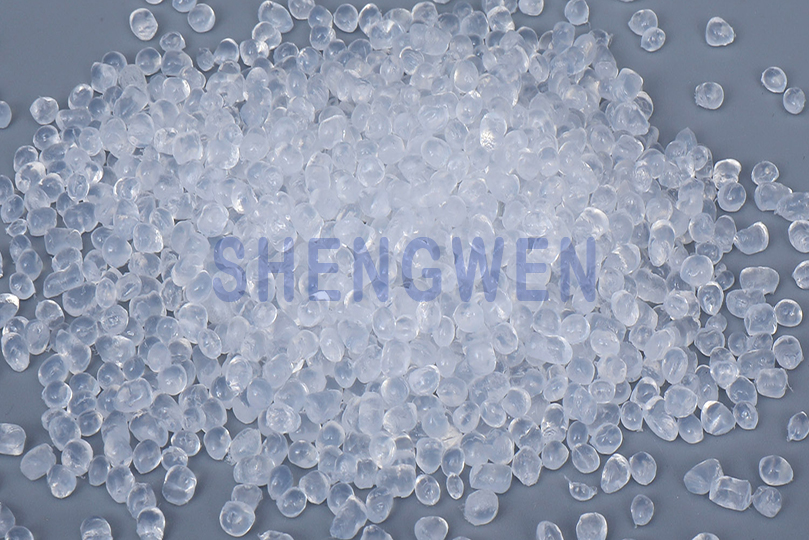
For flexible components, wear related service life is not determined only by surface abrasion. Repeated bending, compression, and deformation can also contribute to material fatigue.
PEBA provides fatigue resistance and elastic recovery, helping flexible components withstand repeated movement without easily losing their functional properties. This can support longer service use in applications that experience frequent deformation.
PEBA also provides good impact resistance and elastic recovery. These properties allow flexible components to absorb mechanical stress and recover their shape after deformation.
Chemical resistance and weathering resistance can provide additional durability when components are exposed to changing environmental conditions. Actual performance depends on the selected grade and service environment. Buyers can review the PEBA material specifications to compare the currently available grades and their listed properties.
Different PEBA grades provide different levels of hardness and mechanical performance. These differences can affect how the material responds to deformation and mechanical stress, so grade selection should be based on the requirements of the finished component.
Tuntun Plastic currently lists five PEBA grades with different hardness levels and mechanical properties.
| PEBA Grade | Shore Hardness | Stress at Break | Tensile Strain at Break |
| K1250 | 50±3D | 20 MPa | >400% |
| K1255 | 55±3D | 40 MPa | >400% |
| K1262 | 62±3D | 50 MPa | >400% |
| K1270 | 70±3D | 40 MPa | >250% |
| K1272 | 72±3D | 40 MPa | >250% |
These values provide a reference for preliminary grade comparison. Buyers can use the listed hardness and tensile properties to identify grades that are closer to the flexibility and mechanical requirements of the finished part.
Hardness alone does not determine whether a PEBA grade is suitable for an application. Buyers should also consider tensile performance, deformation requirements, processing conditions, and the expected service environment.
For components exposed to repeated movement, the required balance between flexibility and mechanical support should be considered during grade selection. The selected grade should therefore be evaluated against the actual requirements of the finished component rather than hardness alone.
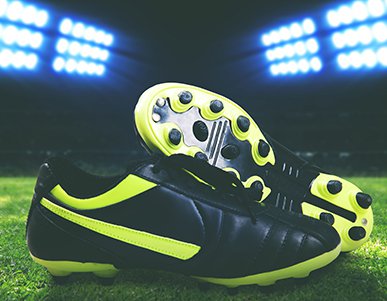
PEBA is used in sports shoes where low weight, flexibility, rebound, and fatigue resistance are important. These properties can support components exposed to repeated compression and movement.
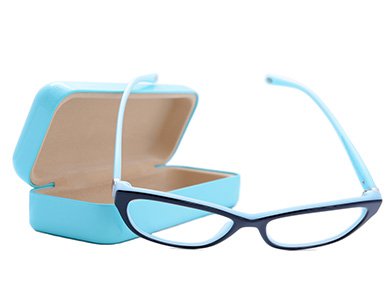
PEBA can be used in eyewear applications where flexibility and elastic recovery are required. These properties can help components tolerate regular bending or movement during use.
Automotive tubing is another listed PEBA application. Flexibility, low temperature performance, chemical resistance, and weathering resistance can support components exposed to movement and changing service conditions.
Before ordering PEBA, buyers should confirm the required hardness, flexibility, operating temperature, and mechanical performance.
The selected grade should match the actual application rather than being chosen by hardness alone. For components involving repeated movement, fatigue resistance and elastic recovery should also be considered.
Availability and customization can also affect material selection. Tuntun Plastic states that a 3 kg PEBA sample can be provided from stock within five working days. Raw materials can also be customized, including the use of fillers such as glass fiber or carbon fiber.
For bulk orders, the stated production lead time is approximately 15 to 30 working days after order confirmation. The actual schedule should be confirmed according to project requirements.
Technical data can support preliminary material evaluation and grade comparison. Buyers should treat listed figures as typical reference values and confirm the applicable grade, formulation, and processing conditions with the supplier before production.
The following processing information is provided for reference only. Actual conditions may vary depending on the PEBA grade, equipment, mold, and application.
Tuntun Plastic's technical data currently lists drying temperatures of approximately 70°C to 90°C, while injection temperature varies by grade. These values should not be treated as fixed production settings. Please contact Tuntun Plastic to confirm the recommended processing conditions before production.
Tuntun Plastic currently lists K1250, K1255, K1262, K1270, and K1272.
PEBA is listed for use across approximately minus 40°C to 120°C and provides low temperature performance. Actual suitability depends on the selected grade and operating conditions.
Yes. Tuntun Plastic states that PEBA raw materials can be customized, including the use of fillers such as glass fiber and carbon fiber. Specific requirements should be confirmed before ordering.
No. The listed technical data represents typical values for material evaluation. Actual production requirements should be confirmed with the supplier before final selection.
PEBA combines flexibility, elastic recovery, fatigue resistance, and low temperature performance for applications involving repeated movement. Different grades allow buyers to select material according to the flexibility and mechanical requirements of the finished part.
For grade selection, samples, customization, or current availability, contact Tuntun Plastic for application specific information.
By continuing to use the site you agree to our privacy policy Terms and Conditions.